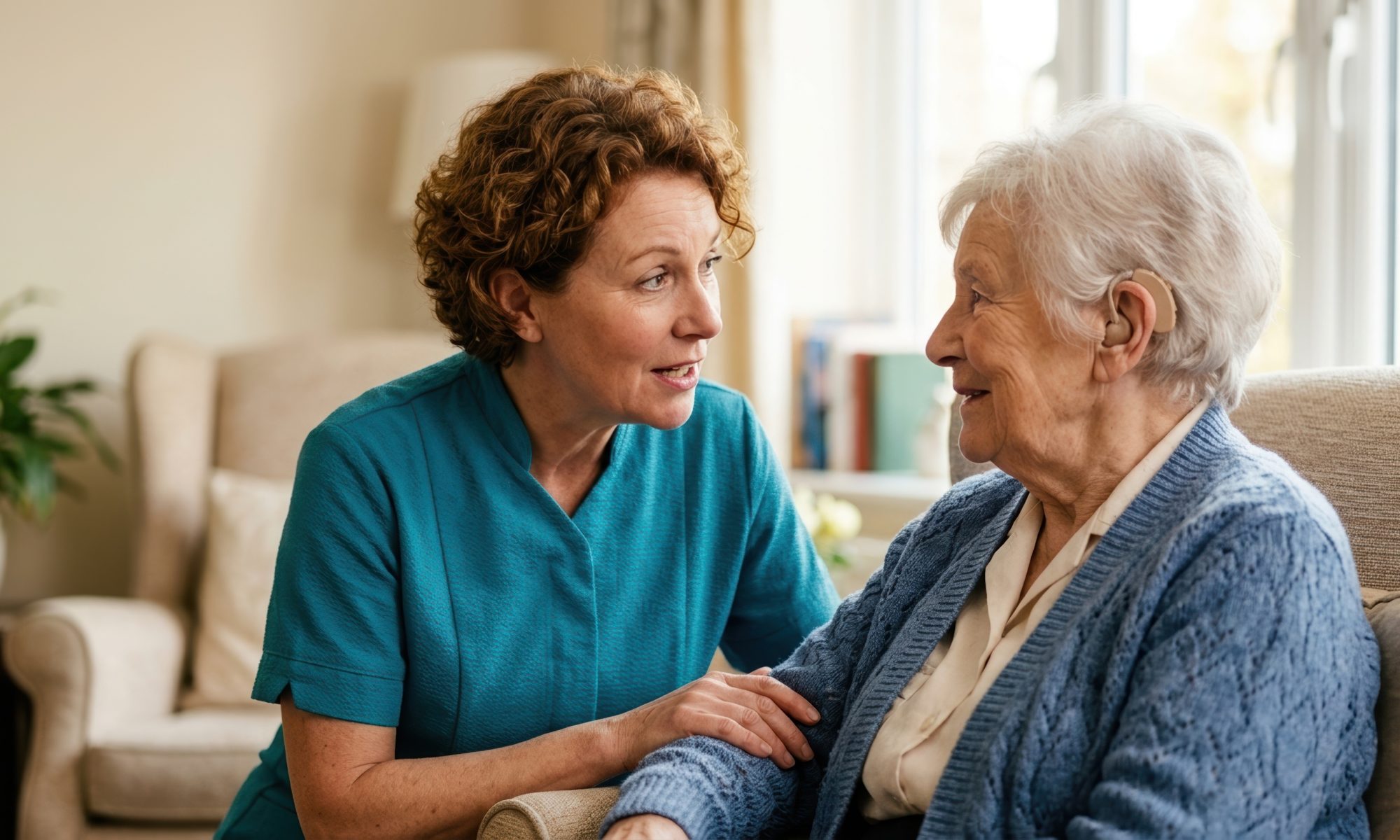
Communicating effectively with someone with dementia means adjusting your language, tone, and pacing as his or her cognitive abilities change over time. This roadmap breaks down how to modify your approach across the early, middle, and late stages of dementia, helping you stay connected with your senior loved one even as his or her needs shift. Small changes in how you speak can make a significant difference in reducing frustration and preserving dignity at every stage.
How Should You Communicate during Early-Stage Dementia?
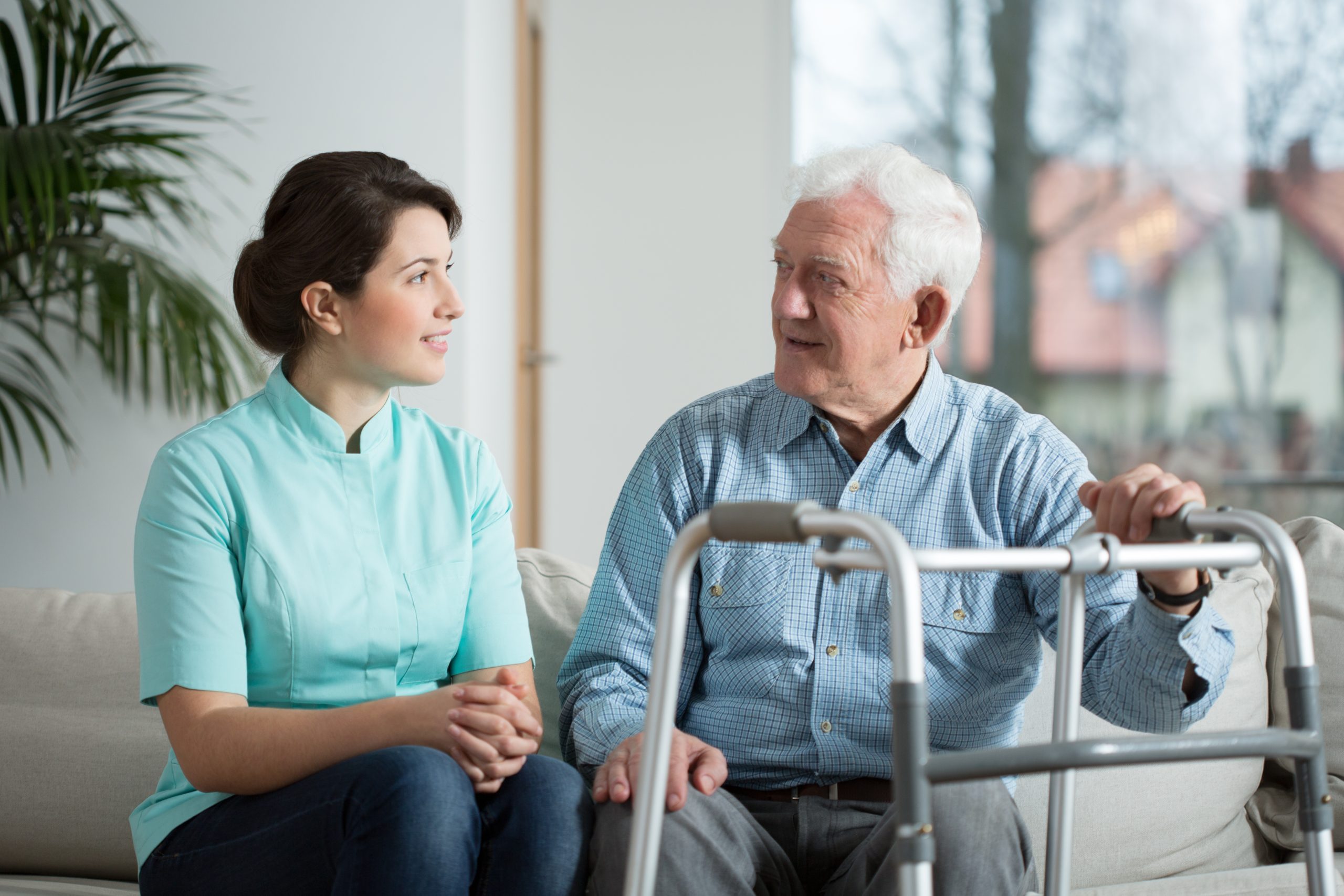
In the early stages, your loved one can still hold conversations and express his or her thoughts, though he or she may have difficulty finding the right words occasionally.
- Speak normally, but avoid rushing your loved one if he or she pauses mid-sentence.
- Give your loved one time to finish his or her own thoughts instead of filling in gaps.
- Avoid correcting minor memory slips unless safety is involved.
- Encourage independence by asking open-ended questions like “What would you like to do today?”
Trained caregivers who have experience in communicating with seniors with dementia can be a fantastic resource for family members. The type of in-home care Naples seniors need can vary. Some need assistance a few hours a day, while others require more extensive around-the-clock assistance. At Assisting Hands Home Care, we tailor our care plans based on each senior’s individual care needs, and the plans can be adjusted at any time. We are a trusted provider of respite and 24-hour care, and we also offer specialized Alzheimer’s, dementia, Parkinson’s, and stroke care for seniors.
What Communication Changes Are Needed for Middle-Stage Dementia?
Middle-stage dementia typically requires simpler sentences, more patience, and greater reliance on nonverbal cues to maintain understanding.
- Use short, direct sentences with one idea at a time.
- Replace open-ended questions with simple choices (“Do you want tea or water?”).
- Maintain eye contact and use a calm, warm tone of voice.
- Repeat information gently rather than expressing frustration.
- Rely on gestures, pointing, or demonstrating actions alongside your words.
How Do You Adjust Language for Late-Stage Dementia?
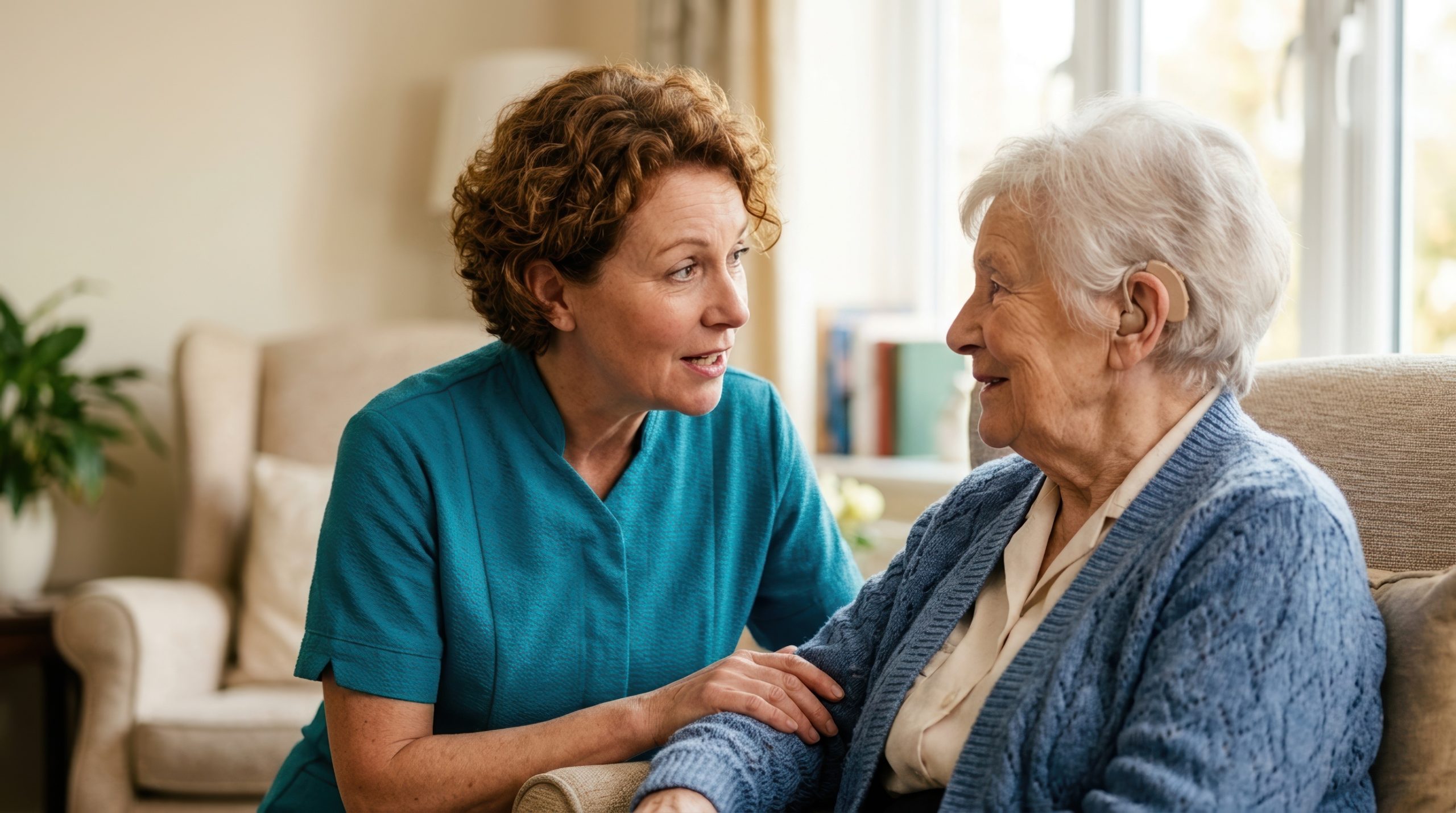
In late-stage dementia, verbal communication often becomes limited, so your words matter less than your tone, touch, and presence.
- Speak slowly using very few words per sentence.
- Use a soothing tone, since emotional tone is often understood even when words aren’t.
- Incorporate touch, such as holding a hand, to reinforce connection.
- Watch facial expressions and body language for signs of comfort or distress.
- Narrate simple actions (“I’m going to help you sit down now”) before doing them.
Why Does Nonverbal Communication Matter More as Dementia Progresses?
As verbal comprehension declines, people with dementia increasingly rely on nonverbal signals to understand their environment and the people around them.
- Facial expressions often convey more meaning than spoken words.
- A gentle tone can de-escalate anxiety even if the words aren’t understood.
- Consistent routines paired with visual cues reduce confusion.
- Physical proximity and touch can communicate safety and reassurance.
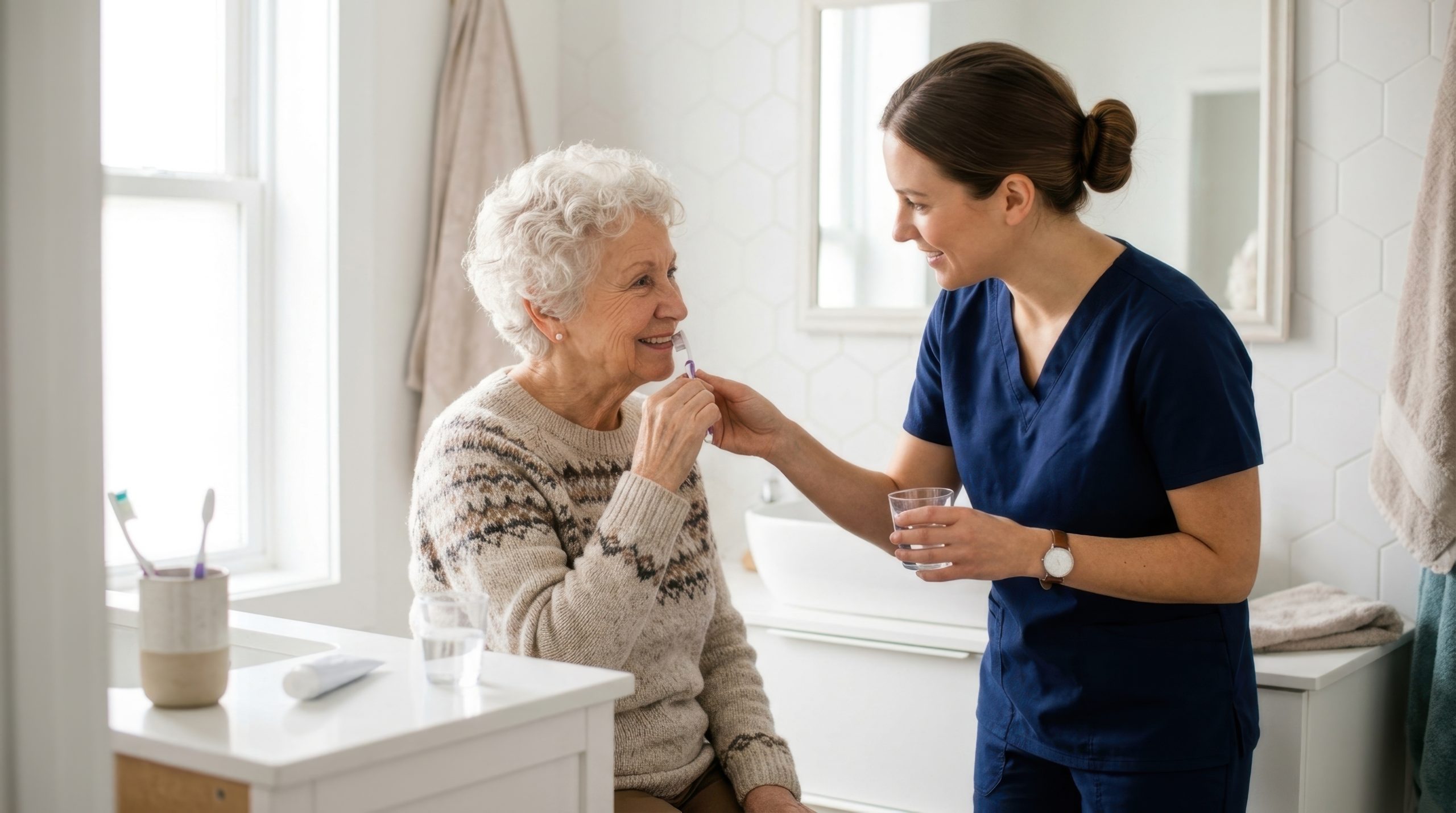
Living with dementia can make it difficult for seniors to manage everyday tasks on their own. Certain age-related conditions can make it more challenging for seniors to age in place safely and comfortably, but Naples 24-hour home care experts are available around the clock to help seniors manage their health. Whether your loved one is living with dementia or recovering from a stroke, you can trust the professional caregivers from Assisting Hands Home Care to enhance his or her quality of life. At Assisting Hands Home Care, we take measures to help seniors prevent illness and injury by assisting with exercise and mobility, preparing nutritious meals, helping with bathing and other personal hygiene tasks, and much more.
What Are Some Practical Daily Habits that Enhance Communication?
Consistent daily habits create a predictable environment, which lowers anxiety and makes communication easier at any dementia stage.
- Reduce background noise before starting a conversation.
- Approach from the front so you don’t startle your loved one.
- Use your loved one’s name and identify yourself if needed.
- Break down tasks into single, clear steps.
- Validate feelings rather than arguing over facts or memories.
Aging in place can present a few challenges for seniors living with dementia. However, with top-rated professional dementia home care that offers Naples families peace of mind, they can still live independently at home. Families can rely on Assisting Hands Home Care to provide their elderly loved ones with mental and social stimulation, timely medication reminders, assistance with meal prep, and much more. Our caregivers are available around the clock to help your loved one live a happier and healthier life. We will work with you to create a customized home care plan that’s suited for your loved one’s unique needs. Call the Assisting Hands Home Care team today.
Frequently Asked Questions
What’s the best way to respond if my loved one repeats the same question?
+
Answer each repetition as if it’s the first time, using a calm and patient tone. Avoid pointing out that your loved one has already asked, as this can cause unnecessary distress.
Should I correct my loved one when he or she misremembers something?
+
Generally, it’s best to avoid correcting minor inaccuracies unless they affect safety. Focus on the emotion behind the words rather than factual accuracy.
How can I reduce frustration during conversations?
+
Simplify your language, slow your pace, and give your loved one extra time to respond. Reducing distractions in the environment can also help your loved one focus better.
Does body language really make a difference in dementia communication?
+
Yes, body language often communicates more than words, especially in later stages. A warm expression and relaxed posture can ease anxiety even when verbal understanding is limited.
Is it normal for communication needs to change frequently?
+
Yes, communication needs can shift gradually or suddenly as dementia progresses. Staying flexible and observant helps you adapt your approach as those changes occur.